Show notes
When Tax Exile Becomes Artistic Gold
Hosts: Neil & Chris
Duration: ~79 minutes
Release: 25 May 2026
Episode Description
Seven years after tackling Led Zeppelin's Physical Graffiti, Neil and Chris return to the double album format with another sprawling, sun-baked classic. The Rolling Stones' 1972 masterpiece Exile on Main Street gets the full Riffology treatment, recorded in conditions that eerily mirror the original sessions: no air, no breeze, and critically, a rapidly depleting supply of Cokes and fruit pastels.
Neil comes in as a lifelong Stones fan, shaped by his mum's record collection and rediscovering the band repeatedly across decades. Chris arrives with a confession: he's never quite cracked the Stones, finding much of their output sounds like jams with words on top. This episode becomes a genuine and entertaining exploration of why that perception exists, and why Exile on Main Street might be the album that finally shifts the needle.
The pair dig into the chaos behind the record: tax exile in the South of France, a dysfunctional band rarely all in the same room, a producer holding everything together while quietly developing his own habits, and Mick Jagger finishing the album in New York surrounded by session musicians, gospel singers, and at least one uncredited Dr. John.
What You'll Hear:
- The full story of the UK supertax that drove the Stones and dozens of other artists out of Britain
- Why the album credits are a mess, and why Bill Wyman was very unhappy about it
- The gospel connection: how a chance visit to an Aretha Franklin recording session shaped the album's sound
- Chris's lightbulb moment realising the Stones are fundamentally an American-sounding band
- The legal battle with former manager Allen Klein, who successfully claimed publishing rights to five tracks after release
- Why Tumbling Dice took somewhere between 30 and 150 takes, depending on who you ask
Featured Tracks and Analysis:
Rocks Off, Tumbling Dice, Happy, Rip This Joint, Loving Cup and Shine A Light all get attention, with the hosts contrasting the tighter, more structured songs against the looser jam-heavy material. Neil makes the case that the album's disjointed, rambling quality is actually a perfect time capsule of where the Stones were emotionally and practically in 1972. Chris starts to come around.
Tangential Gold:
- Neil's trip to Munich, including a vegan atheist teetotaller navigating beer halls, a very funny tour guide named Oz, and a near-midnight airport curfew drama
- The Ice King documentary and a surprisingly gripping history of commercial ice distribution
- Getting locked inside the recording space by an alarm system, with no supplies and growing desperation
- A late night argument with a very drunk colleague about photons, the speed of light, and why physics is apparently broken
Why This Matters:
Exile on Main Street sits at number seven on Rolling Stone magazine's greatest albums list and is the only album with a perfect Metacritic aggregate score of 100 on its reissue. Neil and Chris don't entirely agree with that consensus, and their honest pushback makes for a more interesting conversation than pure reverence would. This is an album that rewards repeated listening and honest interrogation in equal measure.
Perfect for: Rolling Stones fans wanting a candid take, curious listeners who've always meant to properly engage with Exile, and anyone who enjoys music discussion that takes genuine detours through German city culture, 19th century ice logistics, and alarm system evasion tactics.
You can find us here:
- Blog: https://riffology.co
- All Episodes: https://podkit.riffology.co/podcast
- iHeart: https://www.iheart.com/podcast/1323-riffology-iconic-rock-alb-176865775
- Apple: https://podcasts.apple.com/gb/podcast/riffology-iconic-rock-albums-podcast/id1691556696
- Spotify: https://open.spotify.com/show/1LIU9mein7QMw346q20nyy
- X: https://x.com/RiffologyPod
- Bluesky: https://bsky.app/profile/riffology.co
- Facebook: https://www.facebook.com/riffology
- Email: info@riffology.co
Transcript
Show transcriptHide transcript664 passages · 2 speakers
No passages match your search.
Riffology. We have phantom power.
We're back.
We're back.
It's been seven years. It's been.
It's been a long time since we did. It was Physical Graffiti. Which is. The last one is.
Yeah.
Which is. Good memory.
Yeah.
Double album.
Was. Yeah.
And we're doing another double album today.
This one feels much bigger than a double album. You wait. I'm gonna open my can of coke. It's gone up my nose. It's gone everywhere.
But extra froth on that. Extra.
How did we manage to get such a frothy can of.
Frothy can of coke? Actually, we've actually done so much faffing this morning that we've required to open an extra can of cake, which is.
Yeah, it is. It's. It's 12 o'cl clock.
We started at 10.
2 hours. Faffing literally just started. We couldn't get. Nothing worked.
I broke it. No, it was my fault because I broke it.
Nothing worked, which is good. But we were in your new electric van, which was dead cool and like that. And. And. And it's Scorchio.
Yes.
And I don't know what temperature it is, but it's like.
It's too hot. It's the British equivalent. Too hot.
This room, you. And. And we. Obviously we do an exile on Main Street.
Yeah.
Today I'm reading about this. I. I knew that they did. I knew that they. The band had left the UK and done it in. In France. Right. Reading this, they did it in a downstairs basement of this villa. And everyone's description of it is how this room feels to me at the minute. It's kind of. Everyone says it's like it's still.
Yeah.
No air. And. And it's just. So they. That's. They recorded overnight.
Yeah. When it was cool.
Yeah. And it's literally the. The. The. Literally, as we're speaking right now, the light bulb's just gone off. For me. That.
Yeah.
They're doing that because it's cooler.
Yeah. Yeah.
And there's more air and stuff. That's what. They're not just doing it at night. Time to be cool.
Yeah.
They're doing it because it's.
Yeah.
Odd.
Yeah.
During the day. Yeah.
Scorchio.
Scorchio. That's from the Face from the Fast show.
Oh, is it?
Yes.
Yeah.
Where they have the. Like, for those outside of the uk. In the uk, we're obsessed. We have a lot of weather. The weather changes really quickly and so
it's actually all we ever talk about.
Well, we have. We have weather. I watch that. I watch a weather show every day and it tells me what's going to happen to the weather and. And they go. And it's notoriously hard to predict. It's like, you know, it can be hot in the morning, cold in the afternoon, rainy like. And in certain, like, bits of the year, like March and April, it can be. It can be like, you know, hot and sunny and snowy.
Yeah.
In the same day.
Yeah.
And there was a. In the 90s, there was a TV comedy show called the Fast show where they did, like, sketches and one of them was a. An Italian weather show where she just. She literally. I can't remember who it was. Was it Catherine? Oh, God, I can't remember her name, but she was comedy genius. And she just came out and she just went like. Like today it would be Scotchyo and that whole shed. And then she showed a map and it was just like, sun everywhere. Just sun everywhere. Yeah. Every day. I like that. Easily pleased.
Very good.
I've got Diet Coke on my tablet. Oh, no, it's on my nose. And it's gone. It's gone.
We should talk about the. The re. Redesigned vlog, which looks. It looks really, really slick.
Thank you very much. Go to Riffology. Co. We did it. We. We wanted a bit of a re. Re.
It looked good before, but now.
Yeah, it does. It looks better. It looks way better. I'm. I'm really pleased with it. So we're pleased with that. And. Yeah, been good. I think, for. For something that literally started as, like, show notes, a copy and paste of a Word document. It's looking right now. Yeah, it's looking pretty good.
But the thing is, it's the. It's the depth of the content. Obviously. We, you know, we do this podcast and we. And we. And we riff away and we. We talk about things and we get. We go off on tangents, which everyone loves for some strange reason.
More tangents is what everyone keeps saying.
Yeah. And. And then. But the blog has actually got, you know, the meat. It's got.
I think that's where we're at, isn't it? If you actually want to know any, go to Riffology.co. search for it. This one in particular.
It's like. It's like reading, you know, like a. Like a. Like, I don't know, you know, like, you look, you know, when you look at a thing, like in a thing. I'm not doing very well with it.
I know this is good. I keep going. This is going great.
So if you read an article or a story.
Yeah.
You kind of get a bit of something.
Yeah.
But what you've managed to create with our blog is like a proper deep dive.
It's lovely.
Every album. Every album's a proper, proper deep dive.
I have to be honest, I'm really. This is stuff I really love. I. I do really like this kind of stuff.
And the stuff that, you know, I love reading it, you know, like three seconds before you record.
Yeah. Because best way. Otherwise you forget. Like, it's funny because we did this. This is like three weeks old now. Yeah, Three weeks. It must be three weeks old now. And I've forgotten most of what was in it.
Yeah.
And so you have to read it again.
Yeah.
Which is good. But that's there. I think the best way to engage with this is listen to us.
Yeah.
We'll, you know, meander our way around the. The subject of it. If you actually care about the album, go to. Go to Riffology.com and find it. And the details are there.
Yeah, yeah.
There you go. You get Best of both worlds, then.
Yeah. Yeah.
You get to hear us talk about, like. I've discovered that I quite. I much prefer slightly warm fruit pastels.
Is that. That's today's discovery?
It is. Because they're one room. Yeah.
We just had Lindsay. We've just had our last packet of those ones.
We're not asking for more. We should. In fact, Lindsay should write in and tell us what she wants and we should.
Yeah.
We haven't got anything. But I was looking around the, like, literally, you can have anything in here.
We can send you a picture of the bongos.
Anything you want in here, you can have. You can be great. But we're actually.
Yeah. So. So not only have we had the last packet of fruit pastels.
Yeah.
We've doubled up on Cokes, which means there are. There aren't any Cokes.
No. That's interesting, isn't it? And I've also got this thought now that we need to think about. Like, we. I think if we'd left Bongo Cokes in here, it'd be too warm. Be too warm. And I don't like warm Coke.
No.
I don't like that at all.
No.
That's not nice, is it?
No, no. I would have to deal with that.
Dude. That was one of the things. When I first traveled to the United States of America, it would have been about 98, 99, something like that. And I like every drink that you had in America was ice cold and had ice in it. And was delicious.
Yeah.
And then I remember coming back to the United Kingdom and it was horrified. Like, we drink everything warm.
Yes.
Why do we. And it's a bit better now.
Yeah, yeah, yeah.
But still not like, you know, it's still not normal to have ice cold drinks every. Everywhere, is it?
No, no, no, that's true.
Because in America, everything. Everything's ice cold. Is it ice cold as well? It's like, it was like perfectly cold. When you go to a bar, beer serving, it's like, you know, they've sorted it. Yeah. That's one thing they've nailed. Yeah, nailed it. You know, everyone talks about America giving things to the world. Ice cold drinks. Yeah, yeah, that's it. I watched a documentary. I said, why are we talking about ice cold drinks? I watched a documentary about ice. Did you know there was a man called ice? I'm going, this is gonna go. There's a man called Ice King.
Yes.
And do you know what? Guess what he did? Guess what he did. He went. He went to the poles.
Yeah.
Chopped big chunks of ice off.
Yeah.
Put him in a ship.
Yeah.
Drove back down to warmer places.
Yeah.
And sold them ice. And what I loved about it was the first time he did it, they all just like, what's that? Oh, wow. Don't get it. And then obviously it would all melt. So there'll be one third left. So we'd go and cut the I place.
Yeah.
I travel down.
Yeah. It melts on the way.
Most two thirds of it would melt. And then he'd have like, like, you know, a bit left and he would like chop it up. And then of course, all these like, you know, tribes people and whatever else, no one knew what to do with it.
Yeah.
They were like, oh, it's great. What is it? What do we do with it? Yeah, yeah. And. But then eventually he kept going, kept. And then. And then he came up with these ideas of like making like drinks and showing people what to do with it. And then he gave it to some bars.
Yeah.
And then they. And then they almost got hooked on it and their customers really wanted it.
Yeah.
And then he was suddenly like, but you got now.
Yeah.
Like, you gotta, you gotta give me the money.
Yeah.
And then. And then he would also try and figure out how to improve the insulation on the ships and other bits and pieces. And then someone invented the refrigerator and it was, it was.
It put him out of business. Yes, man.
He's living. If you don't. Not if you don't believe. I'm sure everyone on this show believes me. But go, go and have a. Don't do a YouTube of the icing. It was fascinating. It was one of those things, you know, when some. You just get hooked.
Yeah.
On something that you like. Not only did I not know about it, I would not. If someone has told me there's a documentary about a man who brought ice from the poles and I wouldn't care, but he was lovely. Such. It was really. It's good storytelling.
Yeah, it was cool. Yeah.
And I kind of. I got. I was. I was invested in this dude really quickly. Do you know the other thing I was invested in? I watched a TV series called Landman.
Okay.
I've started to watch TV series actually.
Is it one that you can watch in full? Cuz you don't like watching him in bits, do you?
There's two seasons of it. Just enough.
Yeah.
And we've already talked about the fact that I don't like, like watching one season and I'm still upset about that because like Mobland is just like. I got so hooked on Mob.
Yeah. Yeah.
And then found there was not a second season, which I thought there was a second season and then there wasn't a second season and there still isn't a second season finish. Yeah, it's there. And I also read that Tom Hardy's been fired from.
Yeah, I've saw that yesterday.
Oh. Anyway, that's. That's complicated. But yeah, Lamb Man's really good lamb. Again, it's about. I. It's not about the subject, it's about the storytelling. And I got. I watched like 30 seconds of it.
Yeah.
And I was hooked.
Yeah. Yeah.
On the characters and I was in. So I'm watching that at the minute. What are you watching at the minute?
Not watching anything.
No way.
No.
What do you do then?
No, I don't know at the minute. I don't know who I am. I don't know what I'm doing. Just meandering.
You're a bearded theory yesterday.
I was a beauty theory yesterday. That's what I'm doing. I'm meandering from day to day, doing different.
Just from festival to festival.
I quite like it, like. Yeah, I do quite like it like that.
No plan.
Yeah. Like last night sort of gave me a list of what the diary looks like for the next week and said. And asking me questions about what each thing is.
Yeah. And you don't know?
Well, I sort of do, but then I suddenly realized that I don't have any time.
You'll figure it out on the day.
Yeah, yeah. To map anything out. So as is my want.
I. I also. Well, I went to Germany.
Yes. Oh, yeah, Yeah.
I went to Munich.
Yeah. Yeah. Because we're not doing those two week delays are not because big. We were poorly because sometimes that.
Sometimes we're poorly. Yeah. This. This time we just had just stuff to do.
Yeah.
But I went to. We had a team off site in Munich and I've been to Munich before.
Yeah.
And I find Munich a troubling place.
Yeah.
So. So I'm. I'm a vegan.
That's quite meaty.
Yeah. Vegan, atheist, teetotaler.
Yeah.
And we had a. We had a. We had a lovely red. Lovely tour tourist guide. He was very funny. His name was Oz. If you're in Munich, look up ours. He gives these brilliant tourists and he's very funny. And as soon as he opened his mouth and he said, he said, so you want to know anything about Munich? He said, with a beer. Jesus and pork people.
Yeah.
And. And confusingly I thought he said cheeses. So he was showing us churches and
I was like, what?
Where's the cheese? He's talking about cheeses. And this is like, why are there no cheeses? And then eventually he was like, this is not in my church. Yeah, we are the Jesus people.
Yeah.
And I was like, oh, not cheese.
Not cheese.
But yeah. Anyway, as. As much as it's like, I don't know, I guess probably not my favorite place on the planet. I love the people of New York and. And everyone was lovely and friendly and it was really, really cool. But yeah, Oz was epic. And he did they just drink to. Just drink. He drinks every day. I was talking to him. He drinks like two or three pints every day. And they drink it where they drink. That cult, the subculture is. Where they drink is just like, imagine like a pub here. Like you would have your own seat.
Yeah.
So if, if you went and drank in that pub for 10 on the same night.
Yeah.
For about 10 years, they would give you your own seat. Right. So you get your own seat and your own tankard and that's where, that's where you go. And Oz has one of those. He has like six. So he drinks in one every night of the week.
Yeah, yeah, yeah. So he's got like his own scene,
all of these people. The culture there was phenomenal. But I hadn't really. Only when going on that tour with us, obviously. A lot of my favorite music is German music. Right. So I love the German thrash scene and German heavy Metal scene in general, I always have really adored that. I've always kind of really enjoyed that. That scene. And it really hit me that actually Germany isn't like. It's like America. It's like saying, I like. You know, it's like, I like American music, but there's a radical difference between east and West. Co. The place is so bloody big.
Yeah, yeah.
I mean, Texas is like a country in and of itself. But it really hit me that actually like, Berlin is where, like, I guess it's that area of Germany where a lot of the kind of music that I like came from.
Yeah.
And it was that radical difference between them. Like Munich is genuinely like, you know, it's, it's, it's religion, so it's, it's Jesus and pork. And Berlin is, is the, like the least. A religious place on the planet apparently. By, by. By capita. It's the vegan capital of the world and it's just like. Do you know what I mean? It's like.
It's interesting that the, the culture and
the music in the same city, in the same country, though. Yeah, yeah. Radically different. I was. Yeah.
It's interesting though that the. Because Berlin is, you know, very techno. Yeah. Established for music and creativity and art and all that sort of stuff.
Yeah.
Actually that's where the vegans go and the people who are challenging the reality.
Yeah, yeah. The weirdos. But it's funny though, that's where the kind of the. The metal and the community and all that kind of stuff. I. I find it. I find that kind of thing fascinating. Not like. I've always liked that. A bit of Germany. I quite like working in Munich, to be honest. But. But it's. Yeah. It's the fact that they're not like. And it's funny because talking to Oz, her tour guide.
Yeah.
He was like. It makes sense if you think about it, because like one. That one city is influenced by the other city.
Yeah.
So they're kind of going almost like whatever they do. We are.
Yeah.
The polar opposite.
Yeah, yeah, yeah.
Of whatever they're doing. And, and he was like, it's like, there's no such thing as like a German.
Yeah.
You know, and like. And I think it's really interesting because, like, it made me really think, like, is there such thing as like somebody who's British or somebody who's American?
Yeah.
And because these. I mean, the UK is tiny island and even we. Even we're radically different as you move apart. Germany is a big place, but like, compared to the us.
Yeah.
You know, it's like, you know, people being simplified and boiled out. Oh, you're an American. You're. You're American music.
Yeah, yeah.
Do you know what I mean? It's like.
There's more to it.
Yeah. It's just so big.
Yeah.
Anyway, yeah, that's what I was doing. And it was. Yeah. And. And my flight was delayed. Was it? Yeah, it was very, very German, actually. So we left one city and then. And they said if we are a second late landing for curfew in Munich, they will. They will turn us around and we'll have to fly back to Frankfurt and you have to sleep on the plane.
Oh, my word.
What. What do you mean? And then. And then they would say. Because this was like, after midnight, and then they're saying that the curfew was, like, half past midnight, I think. And so if we land at like, 12:30 in one second, they. They won't let us land. That the plane will literally have to go come up and back around to Frankfurt. We will land on the apron here. You have to sleep here. And then at something like 6 or 5:30, we'll leave here, and then we'll go back in 6am in the morning. So you have to, like, sleep here for four hours.
Wow.
I'm like, I think they treat cattle better than that. But they didn't. They got us there on. They got. Literally, the pilot got us there within, like, seconds of the curfew. And.
Yeah.
Mad.
Wow.
Anyway, that's where I was, and I found out that my corporate vice president at work, Mike. So if you're listening to this, Mike, thank you. But Mike. Mike listens to the show. Does he? Yeah, and a bunch of other people that came up to me on. On the off site and said that, yeah, it was quite cool.
That's so funny.
Isn't it cool? Is it just so funny? Probably, like, not, like, wearing a T shirt or anything, but, like, just, you know.
Yeah. They tune in.
Yeah. Wow. Isn't that nice?
Yeah, it's lovely. Yeah. Yeah.
It's a music podcast, Mike. It's a music podcast is what it is. It's a music podcast.
Is that what we talk?
Yep. Yeah, it is.
Yeah.
We've done who we are, what we do, so why. Why? So regale everyone with why you were late. Why did we have to cancel? That was why I had to cancel my week. Why we had to cancel one for you last. Was it last week or the week after? I can't remember.
I think I just forgot that
I
forgot how Time works. So you can't do two things in the same time slot. Oh, yeah, I'll be all right to do that. I'll make both things happen.
Yeah.
And I wasn't able to, unfortunately.
I don't like that.
I can't quite remember even what it. I think it was a vet. Something like. It was a very full day and my brain stopped and I thought, oh. And there was something going on on Monday which meant that I needed all my brain.
Oh, I. Sometimes I can't do this if I'm tired.
Yeah.
I'd rather not do it.
It was that.
I'd rather not do this show if I'm a bit tired.
I'm really not good with time.
Timey wimey.
Yeah.
Chris is. For those. Like, Chris is looking on his phone to remind himself what he was doing.
Yeah, I did. Oh, yeah, I did. I just did too much stuff.
Too much stuff.
And then I finished. I did this thing at Branson that I do, which is like a music showcase.
Oh, yeah.
And that will finish in a half a.
It's too late.
And then I'd be able to get here for nine.
Yeah.
But then the meeting that I had on Monday morning, I'd have to leave the house at like 6. So I was a bit like, that's not all gonna fit today. I'm not gonna be able to make everything all work.
Talking of time, obviously, being teetotal at a team off site is really good fun.
Yes.
And I mean that very sarcastically. And I had a. I'm a mathematician by. By education. And having a conversation with a very, very drunk man who. Who thought he was on at him. Thought he was very, very educated. Talking about time and the speed of light. Yeah. 11 o', clock, after he'd had like 8 gallons of strong German beer. And then I was drawing. I got the waiter to come and give me a pen. Was explaining how times. You know. So, yeah, he's saying if you have a photon, like if you've got two photons. So basically you were saying that, like, the physics is broken.
Yeah.
And that people lie to you.
Yes.
Right. So none of it makes sense. And it can't make sense.
Yeah.
And he was saying that because two photons, like, if you imagine you've got two photons together and you shoot them out in opposite directions.
Yeah.
They have to be going at twice the speed of light.
Yeah.
Because that's how. That's how it works. And then. So having that conversation with a very, very drunk man, that there's no such Thing as space or time is space time. And time slows down the faster you go. So the fact that it's traveling at the speed of light, time is essentially zero. So from the reference plane. Yeah, it's the same speed.
Yeah.
Oh, God, yeah. Do you know when you're like, oh, my God, this is just. So don't do that if you are. Yeah. If you. If you don't drink like me. Don't. Don't go out with drunken friends or learn when to go. Yes.
Nod and smile.
Yes. I could see my. So, so my friend Adriana, she is an astrophysicist. So she was an astrophysicist before she joined our team. And. And she.
She.
She had one glass of wine and she was sitting there just like, smiling, you know, opposite the table. And I was just like, God, I hate you. This is just. Why can I not be sitting on the other side of the table? Anyway, that was. That was why we.
Yeah.
So with that covered, we can get into the album how long we've been going.
20 minutes.
20 minutes. So apologies for that. This. The Rolling Stones.
Yeah.
I'm gonna tell my story about this because just to say.
Right the outset.
Yeah.
I don't think I understand the Rolling Stones.
No.
And I should.
Yeah.
Because they're brilliant.
Yeah.
And I feel bad saying that.
Are you more of a Beatlesy? Yeah, yeah, yeah.
I think because I like songy songs.
My friend said you're either a Beatles or a Stones person and there's nothing in between. Ye like people that you like. Naturally, you'll either grab one.
Yeah.
But I can't do the Beatles like, and again, for me like that. None of their albums make sense to me. They're all boring. I don't understand them. They're all just like. Oh, I don't get. I just don't. They don't do anything for me at all. And it's funny because I always. I'd have thought this era, to me, wouldn't have made any sense at all, but the Stones do.
Yeah.
And there's a few other bands that do this era as well. But like, my mum listened to this. She. My mum listened to, like, Queen and. And. And the Stones would. Would often be on. There's something about, like this, the speed and the energy levels in it. And I kind of love the fact that it's not too sweet sounding. It's not too, like, in this era, a lot of stuff was like the 60s in general was kind of a. Quite a. It was kind of an upbeat hippie Optimistic time.
Yeah.
By the time Exile was done in seventh in the early 70s, that had all crashed and burned.
Yeah.
Do you know what I mean?
Because the coming out of this, they're like. Loads of them had died, aren't they?
Yeah, yeah.
There was a lot like Jim Morrison, Janice.
Janice Joplin. Yeah.
And there was all these kind of stuff that was cracking and falling and burning and it was a proper. You know, there's like a change of guard going on.
It was. It was. It was. I. Yeah. There was a huge amount of stuff. And then the band found themselves in. I didn't know that I. I'd heard of this. Super Tax.
Yeah.
But it was the. The band. What had happened was the. The band had not had very good, like, management and financial guidance, so they just wanted to make music. They were successful. They assumed if they were successful, they'd be wealthy. And so they. They'd done that. They've been successful. Everything was all good. And then the uk, it was Healey's. Healy was the. The. Oh, God, the Prime Minister. No, the.
The Chancellor.
Chancellor. That's the word. That's. That's the word. Chancellor set these taxes where the higher rate tax was 83 and the. And the tax on, like, unearned earnings was 98 and royalties were in that group. So what happened was the band were being charged to make these albums and a whole bunch of other stuff, and then all of their earnings were going to the treasury and they couldn't pay their tax bill.
And they weren't the only one, were they?
No, there was tons like, you know, Rod Stewart, Bowie, Led Zeppelin. There's tons of them. Anybody that was earning any.
Which now makes sense because you have this. This idea that they all just, like, move to LA or they move somewhere else in the world or they move. You know, they don't. They don't. They don't live in England anymore. And it's all those people from that era that just move. They moved out and just left.
Yeah.
Come back for bits.
I remember Roger Moore, famously. Anybody that was, like, being paid like, this was just. Just left.
Yeah.
And so the problem was they. Then. They'd had bad management, so they were splitting up with their manager. And again, that is funny, again, the record company and the manager claimed rights to, like, half a dozen tracks off this album because they were able to prove that they were written. Because the band. There was a big gap.
Yeah.
And the band were holding back music.
Yeah.
Because they didn't want.
Like, this was all recorded over, like, a three year Period.
Yeah. The band didn't want the old record label and the old manager to get access to this stuff and get paid for it.
Yeah.
So they grabbed it, or they essentially tried to hide it. And then the album was released and the managers are able to prove that these tracks were made before that they. They couldn't pay this. So essentially they. They referred themselves as tax exiles. They were like, if we stayed in the uk, we can't pay our tax bill. So it's not like this extravagant living style or, you know, it's not. It's not. We can't afford to do that. There's just. The tax bill is so high that we can't. Like. There's not. There isn't enough money to come in to cover the tax bill for the previous year. So, like, we'd go to prison, basically. We had some problems that. We had some very bad advice and we were pretty green in some ways, and we were just interested in making music and we weren't really interested in the money side of things too much. Very typical story. Money wasn't the goal. We expected to be well off, because in those days you just did if you were successful, and we were very successful. We weren't very well managed, so. So we had to leave England to acquire enough money to pay the taxes. Because in those days in England, the high tax rate was 90%. We made 100 pounds, they took 90. So it was very difficult to pay any debts back. So when we left the country, we would get more than the ten pounds out of the hundred. You know, we might get fifty or something. They all moved over to France and then they felt that they were able then to pay off the tax bill for the year before and a bunch of other stuff. I think at the beginning, when you're young, it's not, you know, it's not really. I didn't find it much of a wrench. But then after a while, you know, you realize that, you know, I mean, I didn't miss the British food and all that, but some English people miss all these things. But after a while you realize that you. It makes you a bit ruthless, I think. But, you know, having said that, if you're a touring musician, you. You tend. That's what you tend to be. It's the road. The road is your life. And so it's not. In a way, you know, you can overplay that. Somerset Mourn, though, said, you know, what did he say? It was a sunny place for shady people. So, you know, it has an underbelly. You know, as well as well as the sort of glamorous exter. Grand old. I was cold, pale but it. Come on fill my hand Reach for your bread back Promise to have a plan if only you would stay But I lost a lot of love on you. Yeah, that's right. Fell down to my knee that I hold to your past you just come on. Sa. Make wish I never love for you. It's a funny old time for the band. Like, for me, I was. I was born in 74, and it would be. This era of music would have been played around the house when I was little, you know, when you kind of, you know, bumbling around the house, this was. This would. Would have been played, but it wasn't probably until my mid-20s, maybe later, maybe 30s, actually. And I remember just, you know, sometimes you think, I don't know what to listen to.
Yeah.
Yeah. And I remember just like, I don't know what to listen to today. I know. And then I put on. There was like a Best of the Rolling Stones album. And that's. And I listened to that and it was funny because I was like, I know these songs.
Right Then they're lodged in.
Yeah. You know, you're like, I kind of recognize them and I. It took a long time for me to remember actually where they. Where they came from. And then. And then late. Much later than that. When Leah was born, Leo was born in 2011. The. There was an album called Grr. And it had again, like this kind of history of the Stones.
Yeah.
Tracks on that. And again, I kind of fell back in love with. With that again.
Yeah.
Yeah. So, yeah. I've got a long history with the. With. With the Stones. I. I wouldn't. I don't know. Obviously I wouldn't call myself a fan, but I think I probably am.
Yeah. Yeah.
I mean, I think, like, whatever the Stones do, I'm always go and listen.
If you've mentioned them a number, even on this podcast, they've come up when you've spoken about stuff you're into. And that.
Definitely part of my Something. Yeah. Part of my culture. Like, I don't know much about the band. You know, like, there wasn't like a, you know, super fan or anything, but the music has always worked for me. It's always. Always a band that I can. I don't know. There's some bands that I just don't. I just can't. I say can't. Just haven't connected to yet. Right.
I think with me, I think my relationship with the Stones is very much like. I think they're. I think they're amazing. I think they're obviously like. There's an incredible kind of force and. And. And the longevity there is just incredible, you know, with how long they've been going and they're still creating and all that sort of thing. I think my thing is that when it comes to actual, like, records that they've made.
Yeah.
They sound like jams with words on.
This does definitely this.
This one in particular.
Wow.
There's a few more as well, but that. But then you've got like. Is it can't always get what you want? Is that what the song's called? Or Wild Horses or. Yeah, for me, they're more like songy songs or even Jumping Jack Flash or, you know, those. Yeah, you know, those sort of things. There was Satisfaction as well, wasn't there from that. They did. They feel like songs, whereas a lot of the other stuff feels like. Feel like jams, you know, And I think that's how they create. They create through jamming. They create through fragments of music. Working into a thing and then laying the vocals on it is my understanding of how they create.
I think here particularly, this was like such a.
Because they weren't all even in the room, were they?
They weren't always present. For most they were. They were really dysfunctional at this point. The band weren't functioning particularly well. You never knew who was going to turn up at any particular session. The producer played on. Played drums and bass on tons of the tracks because there was just. People weren't there. And it's funny because, like, looking at this, like, Rocks Off, Like, Rocks off is really cool. It's a really cool song and it's a. It's an actual song. But then you've got others like Rip this Joint, shake your hips, you know, which are not. They're kind of like, you say, they're kind of jams. They're bits of stuff that have been pushed together. I think Tumbling Dice is quite a good song. And like, some of these go back for ages. Like Tumbling Dice, they'd been working on for years before that, in different. Different formats with different names and stuff.
It's a long album. It's a big album.
And I'm always very, very.
It's always very difficult for me to,
you know, pick out one baby from the other. You should try playing Rip this Joint
has one of the fastest songs in the world and that.
It really keeps you on your toes. But Tumbling Dice has always been a favorite from there. And I mean, I could play it all night. It's just got such a nice groove and a flow on it. But then all down the line, then the later blues, you know, and then there's other lesseners that I just could have seen his face, you know, because
once I start, I'll name them all, man. They're all my favorites.
But there's a few, you know. Maybe your mind is all gonna go at the Union Hall. Drive myself right over the wall Red this gun gonna save us all the time oh, yeah. Wham bam, alabama. It's a funny album. I think it's. And it also, like, the. The way it was built, the way, like, it was done in. In, like, underground, in the bottom of the villa with the kind of mobile recording studio. And they all kind of worked on it over that summer. And then. And then Mick Jagger took it over to New York to be mixed and mastered.
Yeah.
And then added a bunch of stuff, like a load of gospel stuff and pieces and stuff get added to it. And. And it's funny. Like, it's got this.
I can hear. I. We'll talk about this before he record. I can hear that. You know, that idea of, like, it was recorded in one place.
Yeah.
But then there was like, another chapter of the album which gets layered. Layered on top of it somewhere from somewhere else, which gives it that West Coast, American, LA kind of like.
Yeah. It's got that, like, Americana kind of.
I think that's the bit for me is that when you put it next to the bands from that side of the world.
Yeah.
The Rolling Stones, suddenly, to me, make more sense.
Yeah.
Because they're an English band. Y I I In my brain I go, oh, it's like the Beatles or Led Zeppelin or one of these kind of British sound.
But it doesn't sound.
They're American.
Yeah.
Their whole thing is an American sound.
Yeah.
And I think it's taken. It's taken me to listen to this record.
Yeah.
For me to go, oh. And the penny drops. And then it's like if. If you. If you listen to these songs.
Yeah.
Through the lens of it being akin to, you know, your Bob Dylan, your, you know, your kind of West Coast LA thing that was going on in the 70s, you know, and all that sort of stuff, all of a sudden it makes a load more sense.
Yeah. It's. It's funny. They're like Bush, aren't they?
Yeah.
You know, I mean, they're British band. Yeah, they sound British when you hear them talking.
Yeah.
But the music doesn't Musically, they sound. They do sound very American. And I do wonder if a lot of it, like you said for this album particularly, is that. Is that phase where Jagger's sitting in New York.
Yeah.
And. And because he brought in a whole bunch of other musicians. If you're in the blog, it took me ages to kind of get the. That list.
Yeah. It was all session players, wasn't it?
Yeah. So if. At the. Who played on it. So if you look at who played on it, it's. I mean, it's a long old table. Yeah, a long old table. So, you know, there's the. There's like producers, engineers. But then you've also got just the list of people doing like, Bill Plummers on there, doing double bass. You've got like Joe Green, Jerry Cridland. It's just. It's genuinely nuts. The number of people that played on this album, like you say, a phenomenal number of those. Like, some of that was done in. In. In part of the original recording. So it was kind of Mick Jagger and Keith Richards and Mick Taylor, Bill Wyman and Charlie Watts. But then when Jagger's gone over to New York, it's just. It's a room full of sessions. It's just pulling session musicians in to add layers and to do things. And there's a. The piano work so on. So that there's. I just want to see his face. And then he also does backing vocals on Let Loose. But it's a guy called Dr. John who's Mac reckon back.
Yeah.
And that's uncredited anywhere.
Yeah.
Now, one of the things that I found really interesting researching this was the. Often when you're looking at who plays on an album, what I look for is you try and find. Find a copy. I go into Discogs and I look for the. The artwork.
Yeah.
And on the back or in the sleeve notes, usually it will give you the credits and just so you can see who played on it. And this is wrong.
Yes. Like, the spelling's wrong. There's people missing.
Yeah. And it's so. It's extraordinary really, how bad it is. So, yeah, like Bill Wyman fought for. For a long time over. Yeah, the credits over the. Over the album and wasn credited correctly on what he thought he played on. And I think.
But it's all like. They've all got different recollections of that era because they're all at like off the. Off their heads on gear, basically. There's a lot of that going on. But also because they just weren't in the room Together.
Yeah, yeah.
You know, like, Big Jagger didn't probably even get involved until.
Wouldn't have known.
Halfway through. Yeah, yeah.
And it. Because it was all done on tape. It was just depending on what was marked on the tape. Yeah.
There wouldn't be any records.
And then. Because it was then taken over to New York and then played on.
Yeah.
By different people.
Well, I even, you know, on a much smaller kind of scale. You know, I remember have doing a podcast episode with Patty about a song called Carapace of Glass that Riding the Loaded.
Yeah.
And he had to remind me that I played the melodic on it. I could remember. Do you know what I mean? Like, we were just in the studio.
Yeah, but that's very. You. You just pick up an instrument. Oh, I'll play that. And then with no effort to it, like. And then it's. Oh, yeah, whatever. It's like I could. I can. I can. Yeah, like it with code. I can imagine that as well. I'll just pick up code and change it. Or. Or. Oh, we need a bit of code. So I'll go and do it. And you completely forgot. People will come back and say, oh, that thing that you did not. I'll be like, no, I didn't remember. And it's got. And it's got my name on it and everything.
That's it. That's exactly it.
Yeah.
But imagine, you know, doing that with an arm full of heroin or whatever,
you know, it's like, no idea what's happening.
No chance.
It is. It is. It is. Yeah.
Because that was. That. That took. That. This was kind of the big. The big point of Keith Richards wasn't. He was barely functioning at point this time.
Yeah. I think.
And I think the producer. I can't remember his name, but he kind of got. Got in a mess as well for.
With.
With this and.
And the album after, I think eventually is Jimmy Miller.
Jimmy Miller.
No, he. He played on Tundu, he played on bass, played on drums. All of the accounts say that he was basically the. The most sober person in the room. He held the band together, held everything running. His heroin habit would eventually be the downfall of his relationship with the Stones. Yeah, but at this point, the Stones are a mess and he'. And then his habit gets worse and worse and deteriorates and then through. Through this record and the next record, and then that will be. Yeah, yeah. So this was the last. So he. I think he starts the album after this and then doesn't.
Yeah.
Doesn't continue.
Yeah.
But it's funny as well. Reading the. The accounts. The. So the band died, decamped to this. This villa. Right. But then also their dealers and this kind of hanger on us were also knocking around. Yeah. Kind of coming through as well.
Yeah.
And it's. It's funny they were. It's like they moved this entire circus of people.
Yeah, yeah, yeah.
To this. This villa.
Mobile studio as well. Because that's the nice link with what we were talking about last time with Led Zep with Physical Graffiti. And they obviously had that mobile recording unit.
Yeah.
And it was that mobile recording unit they shipped over to France.
Could you imagine that mobile? Because it's like a van almost. Imagine driving that like with how much. How much money's worth in gear in the back of it. Like. You know what I mean? Stand the M1.
Yeah, yeah. All the stuff in and then move that down and so. Just so that. So that Keith could record, wasn't it? Pretty much.
Yeah.
Because he was bedband from for most of it.
Yeah, yeah. It's. It's. It's. Yeah. Pretty. Pretty tough weird times.
Yeah.
It's funny for me as well because like I've gone back and. And recovered I guess discovered more about the Stones and their back catalog from this era and before you kind of Let It Bleed and Beggars Banquet and stuff as well. And it's funny that like. For me it's like it's. It's such a. It's such a golden era and it's got. I love the sound. I love the attitude from the Stones in this. In this era too. But, but like it's funny, there's not. Not a lot of adjacent music that I have that has the same impact on me like this does. And I really enjoy it. There's a whole bunch of stuff like of this era. Era that like it just doesn't to me. Like we talked about the Beatles. I think the Beatles are the Beatles. 1970. They split something.
Yeah. It was all done in about three. That's. This is the thing, it's such a legacy. But it's a really short period of time that they were together doing stuff like a four year period or something.
It's really short. We should perhaps go and do something from that. I think at some point it'd be nice to kind of go and do a Sgt.
Pepper's awesome Beatles album.
Because I've. Like my friend Russell, he loves the Beatles and he's tried countless. And when we've been. I always talk about Russell. We. We kind of musically grew together basically. So he lived next door and we were always sharing music and stuff. But he's always been. His dad likes like Simon and Garfon, Colin and the Beatles and he loved all that kind of stuff. Whereas my like my influence came from my mom.
Yeah.
Which was you know, Queen and the Stones and you know, that kind of. That kind of stuff. Really.
Yeah.
So it's funny we had this kind of different source if you like. But when we both ended up with the same kind of rock and met old. Yeah. As teenagers. But he would always try and get me into the Beatles and I just really struggled with it. I'm with a friend, Anthony, who lived. He lived around the corner. His dad played the acoustic guitar. He knew Aussie.
Yeah.
Which I always find really weird. He's not. He's not that kind of guy you would imagine would know Aussie but he was quite straight laced. But he. He knew Aussie because we all. It's worth pointing out we don't live far away from like. But. And where Black Sabbath kind of were kicking around and where Ozzy would. Was playing as a teenager. But he was really into Pink Floyd.
Yeah.
So. So between the. So I like the Stones. Russell kind of had this. The Beatles stuff and then Tony liked the. The Pink Floyd albums and there was always a lot of that. You know. Oh, you've got to go try this. But you know, remember, you know as a teenager and you've talked about this as a teenager. You. You don't. Do you know what. It makes sense. Like you don't. You're a bit closed. You're kind of like no, no, I like this. That's not my thing.
Yeah.
And like I would later go off and. And really love Pink Floyd. But the Beatles just not.
No. Never got it.
Yeah. For me. But there's a ton of bands like that that we've talked about. The big one for me was Machine Head. Well, I just didn't get Machine Head. And they were. They and Lamb of God where I just did not get them for a while. Where they. They should fit. Right. Bank smacking stuff that I really love. Yeah. And then it's like a switch that goes off inside you.
Yeah.
I remember Lamb of God was supporting Slayer and I went to see them on that tour.
Yeah.
And just didn't get it. I don't really get this. And it was the. It was the album that came after that tour.
Yeah.
He had the single Memento Mori on it and that. I was like, oh, I get it. Yeah. Now I get it. And it was Bizarre. Then went back and I was just like, I. I like. I know. I know kung fu. It was like this kind of just. I get it. I understand all this stuff.
So I get kung fu now.
But it's funny, isn't it? It's like. Do you know what I mean? It's. It's like almost like a. Oh, Chris just nearly knocked a can of coke all over. That was like cat reactions. I thought we were going to have a disaster honor. But it's funny. It's like. I mean, nothing physically has changed for me. It was just like one single. Listen to it. That's okay. Yeah, Listen to a few more times. I really like this.
Yeah, yeah, yeah.
I wonder what the rest of the albums. Oh, I really like the album.
Yeah.
And then. Oh, this band must have changed completely then, because I didn't like them before. And you go back and listen to the couple of. I quite like that now. And then it's like, yeah, I don't know.
But you need a gateway.
You need. You need something super weird. And I wonder for me, like, I
wonder if you just haven't heard the right Beatles song yet or been in
the right frame of mind. Jeff Buckley. I really struggled with that album as well. And then again, that's become a favorite over the years and it's like, I don't know. Yeah, that's weird.
The other night I played Grace with Dan.
Oh, did you?
Yeah. God, it's so hard. It's one of the hardest songs I've ever, ever done.
Why did you not let Dan play it?
You could sing those to singing.
Oh, is it?
Yeah, it's hard. It's easy.
Like, he's a bit good.
Yeah, yeah, yeah, yeah. That's hard song.
I can say I would not have been if I had done. You'd just be like, you do that. You do the jangly guitars and I'll do the. Yeah, Blooming neck.
Yeah.
Blooming eck. What people want you to be is a little band that plays in clubs in. That's where you should belong, you know, they don't want you, a big six to be a big success. You're never the same, you know, so. Especially in England in those days, and even now, I think that you. You. If once you become a success, a worldwide success, you no longer belong to the little place where you started, to the little part of West London where you brought up or played and so on. So you lose something of that when you become a success. 10, oh, nine. With a smile on your face and tear out your eye oh. Come see the get light on you My sweet honey love. Jangling dynasty. Thank you. Touch your eyes Lord shine a light on you make you Lord shine the light on you Whoa. Like the evening sun when you're drunk in the Halloween the evil with your clothes on and your late night friend to leave you in the cold graveyard Just ain't too many flies on you I just can't brush your mouth My angels bleeding out there Wings in time Smiles on the faces and gleam right in there I roll I heard one sigh for you.
Yeah.
Make every song you sing you never choose me the good love I shine a light on you, yeah Whoa like the evening sun. Sam. Mama. I think it starts are very lucky. You always need a lot of luck. And I think they were in the right place at the right time and we, you know quite. When we work, we work very hard. So. And I think so you need all those things, you know, it's no good just being hardworking. There's lots of people hard working but you've got to be hard working on your game and be lucky. It's like being a football player or something. You know, if you're going to be. If you're going to last, you've got to. To play, you know. Bit clever. You know, when you're young you can just rush everything and then as you get older you got to be a bit more box more.
It's important for. For our listeners to know that we're trapped.
We're trapped. Send help. So we share this building and the lady that we're sharing it with at the moment has just left and set the alarm and we're upstairs and we can't get out.
We can't get. If we set the alarm.
If we move, we're going to set.
It's like. It's like.
Like a police will come.
Yeah, it's like that thing where you have them lasers and then you have to dodge the lasers. But the problem is that we actually can't go downstairs. So we have. We have to stay upstairs.
Upstairs. It's hot.
Yeah.
We've run out of coke and fruit pastels and we're just stuck in here now. So we've had to ring Gemma. He's gonna come and help us.
So.
Yeah, we're totally stuck on.
Yeah, yeah. This is. This is the first time. I'm surprised this is the first time
this has happened to me because we're gonna think you. You were gonna move us, weren't you, when you moved to somewhere else and I'm genuinely scared that we're going to get stuck in somewhere that, like, is somewhere we can't get out there forever. I mean, there were worse places to get stuck.
Yeah, we're all right, but. But we haven't got any supplies. That's the problem.
No. Which means we need. We need to solve that, don't we?
So I think actually, you know, if we. If we move, part of that risk assessment has to be fridge. Yeah. Something stash.
I reckon if we've got stuck there, we're all right.
Yeah. If you got stuck there for a bit, it. Yeah, yeah. A fridge would do it, wouldn't it?
I can. As long as I've got my MacBook.
Yeah.
And a fridge.
Yeah.
I could be all right for days.
Yeah.
And a toilet.
Yeah, yeah, yeah, yeah, I agree.
Okay, so look, we got solved that problem. Gemma will come and. And save us shortly, I'm sure.
Yeah. Yes. What we're doing Rolling Stones. Oh, are we doing Fact Chat? Are we there? Yeah, yeah, yeah.
I'm gonna move. I'm gonna scroll. Right.
Because we had a good waffle, didn't we?
Yeah.
I'm trying to think if there's anything else that we've missed that we haven't spoken about.
I read the blog.
Like, if you think we've forgotten something, read the blog, which we have.
It makes me really. The blog. The blog's not good. And we always. There's too much. The thing is, like, if you did. I had this conversation with somebody that listens to the show when we're in Munich and I was like, the. The. Like, if. If this was just us regurgitating what was in the blog.
Yeah.
Be so boring.
Yeah, yeah, yeah. It was tr.
Be like. Do you know what I mean? You know, like when they do. When we talked about Neil Nunes.
Yeah.
Neil Nunes is my favorite, like, news presenter for the. And he does the shipping.
I was gonna say he's the shipping guy, isn't he?
Oh, he's so good. If you wake up in the morning and you say, Alexa News. I've just realized that anybody who. With this playing out loud, Alexa's now doing the news. Sorry about that. I just reminded you. Reminded me of that guy that got. He got. He got in trouble for. I forget the name of the. The law that he broke, but essentially he cycled around on his push bike with a loud hailer shouting, Alexa Play Nickelback and all. Everyone got really angry with him. Antisocial behavior.
Antisocial behavior. Disturbing the peace.
So he literally Went around with Alex Loud Taylor screaming. Alexa, play Nickelback. They've got a new album coming out and I like them. We're gonna. We're getting there. We're gonna get to one of their early albums. I like Nickelback.
Yeah.
And if you don't, I'm sure you've got a good reason not to like. I don't like the Beatles, but I like. I like Nickelback.
Yeah.
Anyway.
Throwing things at the speaker now.
Yeah, yeah. I was saying, like, if, if. If we just read the blogger and we were very detailed and very. I just. I. I'd be bored.
Yeah, yeah, yeah. Y. That's it. That's attack line. Is it? Come for the music, stay for the bongo Cokes. That's the. That's what it is.
It is what it is. And so, yeah, if you want the details, go and get it on the.
How could we do.
Could we do something with.
I. No, sorry. I'm just thinking about keeping the Cokes cool in the bongos.
Yeah.
During the warmer weather. Because that's going to be an important factor for.
We need a fridge or we buy them from. From a shop who've got a fridge. Or we speak to the Ice King.
That's what I was thinking.
Kilogram of ice.
Just bring it over.
I noticed a matter. It was at Parkrun yesterday morning and I noticed a man who sells the cans for £2 each.
Yeah.
The way he keeps them cold is he's got like a little ice bucket with a couple cold water in it
and they just put it with cold water.
Yeah, yeah. Just chucks them in there.
Yeah.
But it wouldn't work for us because it'll obviously be cold, be hot by the time we need them.
Yeah. We've got to think about if anyone's got any ideas.
Do you know what people. Do you know what people's ideas are going to be?
A fridge.
Yeah. Somebody's got to have a fridge in this building. There'll be a fridge somewhere.
There's loads of fridges. It's just.
They'll get stolen.
It's just putting them up here, you
know, we're not allowed to have a fridge.
I could do it one, really, but just. Oh, it's just faff in it.
Well, you just Facebook Marketplace in it. Yeah, Facebook Marketplace.
Yeah.
Someone else have a small fridge. 20 quid. Job done. Do you know why they did. Do you remember the original Xbox? Remember the Xbox series X? The black ones?
Yeah, yeah, yeah.
We did a load of those as fridges. Really? Yeah. Worth fortune now. I had two at one stage in my. I had so many. I couldn't. Didn't know what to do with them. And I was giving them away to people. They're like 5, 600 quid now.
Because they're a collective item. Item, huh?
Weirdos. Anyway, let's do facts on this album.
So.
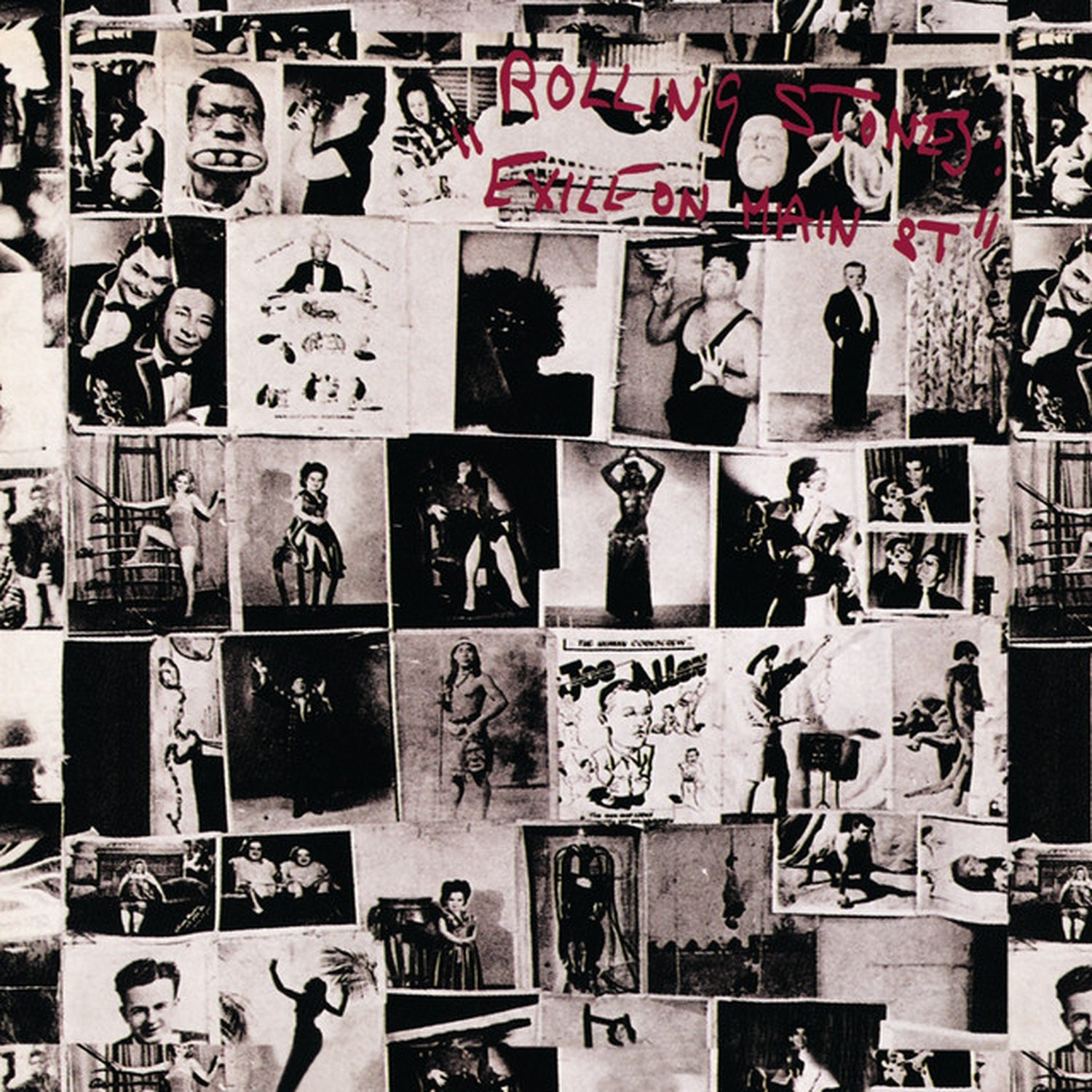
Right. Things that I like about this album. I like the album cover.
Yeah.
I like the album. It's. It's from a tattoo studio. It's got nothing to do with the band. It wasn't even meant. It wasn't even shot for them. It was shot for another band. I'll get to that.
There's a few of those, isn't there? That happened.
Yeah, there's. Yeah, it's. It's. It's. Yeah, these.
These artists. Photographers made loads of stuff and then they.
People just come in and get them.
Yeah.
Yeah. Released on 12 May 1960. 72. Famously, everybody who worked on this album has a different memory of who played on it and who worked on it, which I think we've covered as well. I think it was really interesting. The blog makes that super clear and I think that's really, really cool. The band had decanted to. To France for it to be recorded in South France because of tax laws. 18 songs on this album, which is a lot. Runtime. 67 minutes. There's not. This wasn't an era of Stones doing long songs. They were kind of short and punchy. Produced by Jimmy Miller, which I think this was his last album for. For the Stones is the last one that he did key singles. It was Tumbling Dice, which is the one I kind of really know. Happy. I think Tumbling Dice was the biggest. Happy is the one. Happy's been covered more times.
Ye. Yeah. That's all Keith Richards singing, isn't it?
Lots and lots and lots of people have covered Happy and then others were plundered My soul. Which is again, really, really interesting. Slightly before this, it comes after the band were in a lot of trouble. So the band are in trouble here for tax. But it also comes after the back of the Altamont Festival, which. That's the one where the Hell's Angels were in charge of the security.
A free festival, but somebody ended up getting stabbed and killed.
Meredith Hunter.
Yes.
Yeah. Was stabbed to death. Yeah. Which obviously not ideal. Now let me go back down. Let me scroll right down to my facts table, because that was from the top of my blog. So the album cover was from a tattoo parlor. It was an outtake From Robert Frank's 1958 photo book, the Americans, which is a collage of sideshow circus performers, including the contortionist Joe the human corkscrew Allen, which I think is. Is. I don't know. I like that kind of stuff, you know, where it's. There's like a story behind the image. I quite like that as well. This was a period where in London there was a studio called Hypnosis. I don't think they did this one, but tons of albums that came out in the 60s and 70s were from hypnosis. It's what if you like this kind of era and you. You like that kind of space and, you know, it's worth seeking that out. It's not on. I had a really hard time getting hold of a copy. I had to buy the DVD off of ebay. But I did see that it's been reissued. Yeah, you can go and get it. Inevitably it'll end up on. On YouTube, I would imagine at some point. But right now, if you want a copy of it, you need to go and buy it, which is. But. And it's worth it if you like this era of kind of David Bowie and. And the Beatles and the solo work that came after the Beatles. A lot of that was done with. With Hypnosis. Rolling Stones. Yeah, It's Led Zeppelin as well. It's really cool. Really, really cool if you like art and, you know, album photography. Really, really cool. Yeah, super cool. Jimmy Miller on drum so Jimmy Miller was the album' he plays drums on three tracks. The Tumbling Dice. Apparently Charlie Watts really struggled with the Breakdown. Happy and Shine A Light. Yeah. The Tumbling Dice Code was the only known Rolling Stone song on which Watts overdubbed a second drum track over the original Loving cup, despite being entirely an Olympic studios recording from 1969. So remember, they're breaking apart from the. The record label here as well was. Was first played live at the Stones Free Hyde park concert on 5 July in 69, the show that was Mick Taylor's official debut as A Stone and that opened with Jagger reading a Shelley poem in memory of Brian Jones who had drowned in his. In his swimming pool days earlier. Alan Klein, who was the band's former manager. So you know in the clip where he talks about they had bad information, bad advice and guidance and tax and all of that stuff. A large part of that is aimed at Alan Klein. He. So he's the former manager who they had spent years trying to escape and a ton of cash trying to get away from. Successfully sued the band after Exile was Released on the ground that five songs on it. Sweet Virginia, Loving Cup, all down the Line, Shine A Light and Robert Johnson reworking Stop Breaking down had been composed during his tenure. The company, his company abkco acquired publishing rights to all five.
Wow.
After the album was. Was released and the band were very, very unhappy about that. Dr. John plays piano on I Just Want to See His Face, but he's uncredited on the original LP sleeve. The same track features Keith Richards on electric piano, Mick Taylor on electric, Bill Plummer on string bass and Jimmy Miller on percussion. With no Bill Wyman, no Charlie Watts and no Nikki Hopkins. This was all after the Mick had gone to New York. So this is that you have the session musicians and all that stuff happening.
Yeah.
The famous gospel inflected backing vocal arrangements on Tumbling Dice, Loving Cup, Let It Loose and Shine A Light were inspired by Jagger, Watts and Billy Preston visiting a lot. Los Angeles Evangelical Church where Aretha Franklin happened to be recording the live sessions that became her 1972 album Amazing Grace. I didn't not. I didn't not know that until. But I think it's really, really cool and there's a clear kind of gospel influence.
They were huge. Yeah.
Through this. Yeah. The 2010 Rigish Read Issues bonus track Plundered My Soul has got new lead vocals by Mick Jagger and additional guitar parts were recorded in 2009 by Keith Richards and Mick Taylor. Taylor contribution is the former stones first credited Rolling Stones recording since 1974. It was redone for the. For the 2010.
I quite like that. You know, they've taken these things that are unfinished and you know, 40 years later they're just, you know, refining it, adding new ideas.
I like that as well. Like Def Leppard went back and redid some stuff and it ends up with Joe Elliott dueting with his younger self. Yeah, it's cool.
All the stuff like that's really cool.
I do like that.
I think when it's for the sake of it, it's not very good. But when it's like part. If that feels like part of the narrative.
It does a little bit. There's been tons of reissues and stuff of. Of all of the Stones albums.
Yes.
Yeah. But this one I was expecting like it's the 50th anniversary was not that long ago I was expecting and there was nothing really. I was expecting them to do that. I suspect it's because they don't own their own catalog anymore. So I don't know whether they are trying to do like something bigger or whether they didn't feel like Exile was a big enough album to do. I don't know. But yeah, bit a bit bizarre. Bill Wyman is credited as the bass player on only eight of the album's 18 tracks. The other parts were played by Mick Taylor, Keith Richards, or session double bassist Bill Plummer. Wyman has insisted in subsequent interviews that the credits are wrong and that he played on more. And there was a lot of issue. Took a lot of issue with that. Famously, tumbling dice took 150 takes to complete. Engineer Andy Johns later described it as like pulling teeth. The song was begun at Stargraves in 1970 as an unrelated piano led number called Good Time Women, with Ian Stewart's piano dominating the arrangement. But when they actually recorded, recorded it took. The quotes are between 30 to 150 takes there. There's descriptions of like just tape all over the floor and they're just going over and over, over to get it right. The album is widely regarded as the highest ranking Rolling Stones record on every credible greatest hits of all time list, including Rolling Stones 500, number seven in 2003 and 2012. It was number 14 in 2020 and the 2023 revisions. No other Rolling Stones album has ever place 14 on the Rolling Stones magazine list. The 2010 deluxe reissue carries an aggregate Metacritic score of 100, which is the only album to do it. There's only a tiny handful of other releases that have ever met.
Wow. Wow.
Which I think is interesting because I don't think it's that good.
Yeah, it's 18 songs. It's over an hour long. It's. It's a collect. It feels like a collection.
There are bits of brilliance in it. There are bits that feel a bit rambling. There are bits that are disconnected, There are bits that don't sound very well connected. I think what it is for me is like a perfect time capsule of where the Rolling Stones were at this time.
Yeah. And how they felt.
And it feels that. That, for me, that comes across in the disjointed songs in the fact that the session musicians are playing on it and the fact that they're not really sure who's credited for what, who wrote what. The fight with the manager, the fight with a record company, the fight with
the tax man having no home.
Yeah, this. This, for me, this all comes out of this record. All of the, all of the. The lyrics and the. And the. Yeah. Like everything here is, is. Is part of that, like a perfect album. I'm not. I don't know. I'm not sure and then we talked about this already, but the. The. Yeah, the. The COVID image of Robert Frank's tattoo parlor is held in a permanent collection in the Art Institute of Chicago. The Rolling Stones don't own it. They licensed it for this album. So it's not theirs. And that's it for facts.
Good facts. Right. Should we play a tune and then decide what's next?
ZZ Top? Oh, yes, let's do it. Let's play tune and then we'll talk about why that's a good choice. Some people in, you know, all kinds of artistic endeavors, you know, writing books or making movies or records, that. People love the process of it. They love the process of being in the studio or editing the movie. And so someone at some point says, I think you've done now. I think you've finished what you've got. What you've got is good enough, you know? Sam. Through the waves Stormy winter. And then that friend Help you through. Try to stop the wind Find your eyeballs Drop your red Drop your reason blue. Thank you for your wine, California. Thank you. Yes. I got the desert in my tornado. Come on down, sweet genius, down. You got it, You. Sam,
We're saved.
We're saved. Gemma has come and saved us, which is good. So we can get out now.
We can get out. We can actually go.
We.
Because we. We did the toilet thing. We did the action sequence of forward rolls.
That was very funny, wasn't it? Having to. Looking for sensors for the alarm so we could go and have a wee.
And then. And then Gemma came and saw with it. So we're fine, we can leave now.
Yeah, was a bit anti. She just kind of basically just came in and said, everything's. Yeah, yeah, it's all right now. Yeah. So we've been. Been. Yeah. As far as, like escaping, but we could.
And we're off. And so top.
Next. Next. I thought we'd do something like, I don't know, like this. This was 1972. This. 12 May, 1972. And I thought it's an interesting one for me because it's. It sounds like the Rolling Stones. And the Rolling Stones sound like the 60s to me.
Yeah, yeah, yeah, yeah, yeah.
And I thought there's a whole bunch of stuff that was kind of happening in and around this time that didn't sound like the 60s.
Yeah.
And the one that kind of leapt out to me. Well, I mean, there's Aerosmith. It's a bit later, I suppose, but. But I liked this one. So. So tres hombres from 1973. Scott LaGrange on it and a bunch of other stuff on there. And it's called Beards. Long Beard Beards. And I don't know, for me, I like being. Being. I would listen to ZZ Top probably loads more than a lot of other albums around this.
Yes.
Time. I quite liked it. There was something.
It's got a great sound to it. It's actually really clean. Everything's really like, well mixed and it's proper like this.
Yeah.
But this was that era where we were talk. We were getting into this world of like, you know, I don't know, like, as you say, A Smith were doing their early. Their early stuff. Really early stuff. But then there was the thing with Leonard Skinner and all these other sort of bands which were. That. Is that American. That American 70s production was like. Something about. It was super. You know, you can listen to it now.
Yeah.
And it still stands up.
Three analog sounds. There's not too much going on. Layered. It's quite punchy as well. It's quite good. But it's not like. Oh. It's not like. I would say, like, you. You could listen, you could put ZZ Top on and leave it playing all day and you would not get like. Your ears wouldn't start ringing.
Yeah.
Whereas I think a lot of modern rock production is.
So you slammed it.
Slammed in there. You get. I get a bit of fatigue. I kind of get a little bit of this, like. Oh. Do you know what I mean? It's. And I don't know, that's probably bad because I'm old. But there is something really nice about this, about this era of production. 70s and 80s.
I think it's built for vinyl. It's.
Yeah.
That's the primary form.
So it's got.
It's got to work dynamically with that format.
Got a bite to it. But it's kind of quite.
Yeah.
Relaxed. Yeah, it's nice. It's not, you know, it's. It's. It's not going to bite your face off and it's good. And this album's well cool. Like. Tres Ombres is well cool. There's some really, really cool stuff on it. So let's do that. So, yeah. Yeah, we've been released. We can go home now.
Yeah. Bye.
Sorry.